
This article originally appeared in our weekly newsletter. Subscribe by signing up for a free loyalty account here.
Sandra Bullock looked out at a packed Manhattan audience as dozens of iPhones gazed at her, recording every word. “Our people are here,” she said, and the crowd exploded with delight.
Wednesday’s New York premiere of Practical Magic 2, which found Bullock seated alongside co-star Nicole Kidman, would have been unthinkable three decades ago. When Practical Magic first came out in 1998, its formula underwhelmed critics and underperformed at the box office. It took years for the fans to accumulate and justify the latest entry, in part because its unusual tone couldn’t be processed by an industry that delivers verdicts overnight. Star Trek was canceled in 1969 and needed a decade of reruns to gain momentum; Practical Magic took nearly 30 years.
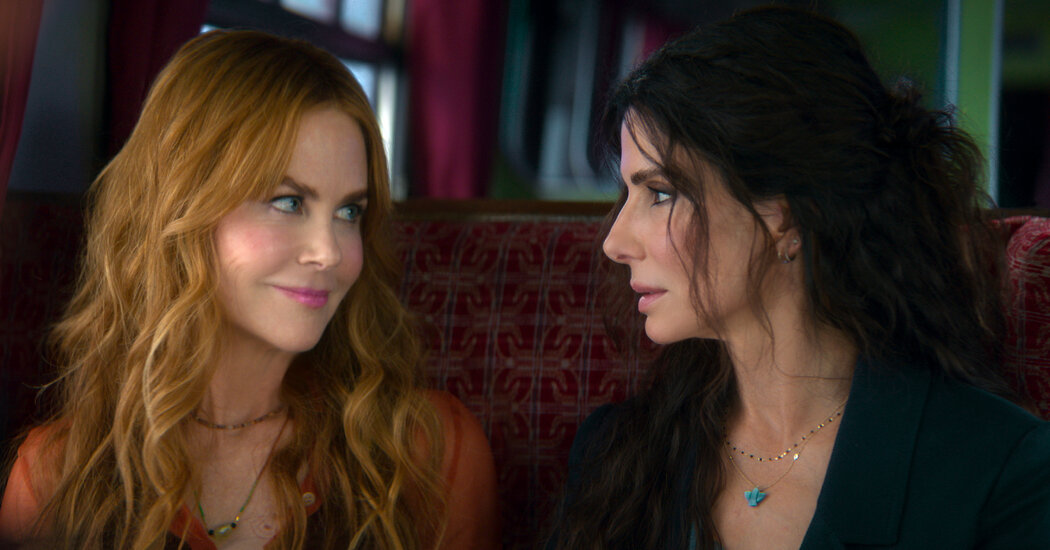
As the story of grown sister witches played by Nicole Kidman and Sandra Bullock, whose family curse dooms anyone they love, Practical Magic may have looked a little late to the party. It arrived in the aftermath of a Hollywood blockbuster witch hunt that included 1993’s Hocus Pocus and 1996’s The Craft. In reality, the new movie was more grounded than the former and less gothic than the latter. As Sally and Gilly attempt to battle the ghost of an abusive ex-boyfriend and navigate the dangerous prospects of new love, Practical Magic ultimately becomes more about sisterly bonds than any of the fantastical ingredients surrounding them.
As audiences gradually saw the appeal of that dynamic from two beloved movie stars, Practical Magic gradually found its audience on DVD. “These are the people that are supposed to be here,” Bullock told her Practical Magic 2 fans, some of whom wore costumes and brandished brooms. “They’re the ones who fell in love with it, which is the reason we loved it.”
Sitting by her side, Kidman admitted that the initial response to the movie discouraged her from chasing commercial opportunities in favor of artier ones (her next movie was Stanley Kubrick’s beguiling erotic mindtrip Eyes Wide Shut, which has accrued a very different set of fans over the years). “It was rough at first,” she said of the Practical Magic reception. “But then suddenly we were like, ‘Oh my god, people actually really love this film.’ We’re so grateful. You have no idea what this means to us.” When the lights came down and an opening montage reintroduced the sisters in a new stage of life, one fan was heard muttering to a friend, “How do they still look the same?”
Ironically, the most unclassifiable aspects of Practical Magic ended up as the secret to its long-term success. “The movie is not disciplined in terms of genre,” said co-writer Akiva Goldsman, during a Q&A after a screening of the original movie at the Southampton Playhouse last month. “It’s moving all over the place – romance, horror, supernatural fantasy. Goldsman, who won an Oscar for A Beautiful Mind, has experimented with odd formula hybrids throughout his career ranging from Hancock to I Am Legend. “The thing that’s lovely about genre, whether it’s science fiction or fantasy, is that it operates as a lens on normal human emotion,” he said. “A heart can yearn in a way that is specific to magic — spells, all these things that are impossible — but it’s really hard to do literally in a way that’s new. You know, that’s what Shakespeare did.”
Goldsman credited original writer Robin Swicord with taking a first stab at adapting Alice Hoffman’s novel. He augmented that with much of the dialogue and Adam Brooks, a friend of director Griffin Dunne, “added the jokes.” Ultimately, that trio shared writing credit, just as Goldsman does Hoffman and Georgia Pritchett. “You can either fight desperately to get credit and make sure other people don’t get credit, because there’s more money in that,” he said, “or you can just agree to share credit, and that’s what we did.”
The initial cut of Practical Magic was a much darker movie with more jumpscares. “There was a lot more of the Nicole ghost story,” he said. “You can see the beginnings of those scenes that led to some scary stuff.” After a preview screening, a Warner Bros. marketing executive shared some unexpected insight with the filmmaking team that drew from his experience at McDonald’s. “He said, ‘We made a burger called salsa and called it a salsa burger, but nobody wants salsa on their burger,’” Goldsman recalled. “We’re like, ‘OK, is this a gag?’ It wasn’t. He started this attempt to make the tone unified.”
Jump scares were reduced, jokes added in, and suddenly Practical Magic became an unusual mix that inadvertently foregrounded the chemistry between its two leads. The sequel draws on that same dynamic. Kidman is now a doting aunt and Bullock the mother of a reluctant witch offspring (Maisie Williams and Joey King) who must once again confront the boundaries of the family curse. Directed by Oscar winner Susanne Bier and produced by Bullock, Kidman, and Denise Di Novi, Practical Magic 2 reflects the winding path of the franchise from a YA fantasy to feminist text. The latest tagline, “No magic is stronger than sisterhood,” doubles as a mission statement. I’ll admit I’m not the target audience for these movies — but sitting in that ecstatic audience at the New York premiere, it all made sense.

Fan culture drives everything now. It’s at the root of the obsession over podcast superstars, TikTok influencers, and athletic spectacles alike. Yet in today’s era of instant gratification, true fandom still takes time to show its potential. The success of the Marvel Cinematic Universe evolved from half a century of comic books. December’s event movie Avengers: Doomsday builds on nearly 20 years of Marvel movies, just as the recent surprise hit Coyote vs. Acme builds on nearly 100 years of Looney Tunes cartoons.
Last week, Coyote vs. Acme crossed the $30 million box office milestone, outgrossing the initial tax write-off that Warner Bros. received when it canceled the release back in 2023. New distributor Ketchup Entertainment only managed to acquire Coyote vs. Acme after widespread protests from legions of Looney Tunes fans — who had yet to see the movie — including one who went viral for dressing up at Wiley E. Coyote outside the Warner Bros. lot.
Fortunately, Coyote vs. Acme was worth the effort, as the movie builds on Looney Tunes lore best appreciated by older audiences: The simplicity of the old Roadrunner and Coyote cartoons establish the conceit behind this unexpected courtroom comedy, as the Coyote sues the company responsible for the many dysfunctional devices he uses in his attempts to ensnare his prey. Adapted from an old short story in The New Yorker, this live action/animation hybrid turns the Coyote’s relentless (and seemingly impossible) quest to catch the Roadrunner into a smart metaphor for the constant forward momentum of living a goal-oriented existence regardless of the result. It molds depth from the preexisting investment that only fandom can provide.
This narrative strategy lurks everywhere now. A new adaptation of the videogame series Resident Evil, directed by Weapons auteur Zach Cregger, follows a goofy protagonist who evades various zombie threats by building on his love for videogames. (On more than one occasion, he references these experiences in the process of attempting to survive the night.) The whole thing doubles as a metaphor for the popularity of the medium that inspired the movie. Fandom can seem frivolous in the moment and life-changing years later, a fundamental part of navigating the world.
History has taught us to keep playing the waiting game. If success was only measured by immediate results, Hermann Melville’s Moby-Dick flopped and Vincent van Gogh’s paintings never found an audience. Such was the state of affairs when these cultural events first arrived on the planet. Audiences ultimately came around and stayed there. It’s hard to tell if the fans of today’s pop culture hits will persist for another 100 years, but in the case of Practical Magic, a quarter of a century is a solid place to start.
Practical Magic 2 is now playing at the Southampton Playhouse.