
Greek mythology is dominating the summer movie season, but Spider-Man isn’t far behind. Christopher Nolan’s sprawling adaptation of The Odyssey, whose cyclops monster first made an appearance earlier this summer in Minions and Monsters, continues to churn along. The newly-released live capture of Hadestown brings the hit Broadway show to the big screen with jazzy variations on Orpheus, Eurydice, Hades, and Persephone reigniting ancient love stories through a lively prism of song and dance. (It has already outgrossed the live capture of Hamilton released last year.)
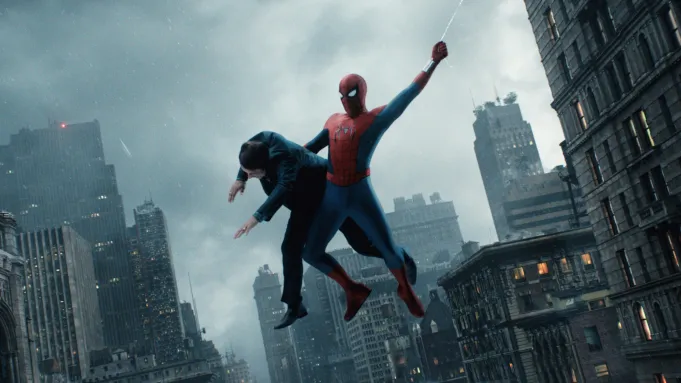
Tom Holland’s latest turn as Peter Parker in Spider-Man: Brand New Day echoes the plight of Odysseus as the webslinger navigates a world that has seemingly moved on without him. Holland and real-life partner Zendaya co-star in both Spider-Man and The Odyssey, helping to fuse the mythology of 20th century pop culture with its millenia-spanning precedent.
These stories and characters maintain their currency over time because they embody archetypes broad enough to address any given cultural moment. However, only Spider-Man has intergenerational appeal. Nearly 20 years after the Marvel Cinematic Universe turned superhero movies into a standalone genre, Spider-Man remains the most beloved figure among a universe of characters that only gets busier.
As the Wall Street Journal reported this past week, the preschool Disney+ streaming show Spidey and His Amazing Friends boasts 1.25 billion hours of viewing time since its launch five years ago, while various other manifestations of the Spider-Man franchise have made the character into Disney’s “second most lucrative consumer-products brand, behind only Mickey Mouse.” Meanwhile, Spider-Man: Brand New Day is on track to feature the biggest opening of the year so far. It’s enough to hint at the kind of longevity that has kept The Odyssey relevant across several eras of civilization.
How does Spidey do it? The answer may lie in another enduring story from the previous century — the myth of the teenager.
When Peter Parker became Spider-Man for the first time in the August 1962 edition of Amazing Fantasy, the concept of the teenager was just a few decades old. Forged in the universal requirements of high school education and a postwar environment that emboldened the middle class, teens arose in the 1950s and 1960s as a wily embodiment of youth in revolt: old enough to see the world on their own terms but just a few years shy of genuine responsibility.
When writer Stan Lee and author Steve Ditko envisioned Spider-Man as the alter-ego of a nerdy high schooler bitten by a radioactive spider, they were reacting to the emerging hierarchy of teen life in America. Peter was a geeky outsider whose sudden abilities went straight to his head — until they inadvertently precipitated the death of his beloved uncle, and led the webslinger to his timeless refrain: With great power comes great responsibility.
That fortune cookie wisdom cemented his appeal. Though everyone from Huck Finn to Holden Caulfield carried coming-of-age novels in the years leading up to him, Spider-Man pushed the concept into the commercial stratosphere. Every teenager confronting young adulthood could relate.
Spider-Man is perpetually growing up. There are at least four active Spider-Man storylines transpiring across movies and television at the current moment, and three ongoing comic book series, none of which seem to cannibalize his overall appeal. Though the Spidey in Brand New Day is a young adult, Tom Holland’s soft features give him a striking, teen-like appearance in closeup.
This attribute is just as relevant to the fragility of his turn as Odysseus’ weak-willed son Telemachus in The Odyssey. Fans adore Holland for embodying the same incongruous fantasy that has made Spider-Man popular across generations: for being sweet, relatable, and larger-than-life all at the same time.
When he first appeared as Spider-Man 10 years ago in Captain America: Civil War, Holland was essentially a newcomer. Now, his vast celebrity appeal stems almost entirely from his recurring role rather the many others he’s taken on since then. In a recent negative review of The Odyssey by scholar Emily Wilson, whose translation of the poem inspired Nolan’s movie, even she couldn’t help but acknowledge one fundamental strength: “Some of those who buy the book or show up in cinemas to watch Tom Holland may go on to study ancient Greek.”
If Holland is a Trojan Horse for young people to discover the classics, or feel seen by them, so be it. Both Spider-Man and The Odyssey contain essential ideas about the virtues of self-determination. After all these years, Spider-Man remains a draw for teens eager to confront the world on radioactive terms of their own.