
This article originally appeared in our weekly newsletter. Subscribe by signing up for a free loyalty account here.
A famous filmmaker once said that all moviegoers want is “a girl and a gun.” Jean-Luc Godard attributed the line to cinema pioneer D.W. Griffith. Pauline Kael attributed the line to Jean-Luc Godard. Regardless of who deserves credit, the observation is still relevant decades down the line, though with a few different layers of meaning attached.
Recent sensations such as One Battle After Another certainly deliver a girl (or more accurately, a young woman) and a gun (lots of them). However, “the girl and the gun” concept also points to the reductive nature of the marketing machine, the presumption that most audiences only need a few formulaic details to determine whether a movie deserves their time.
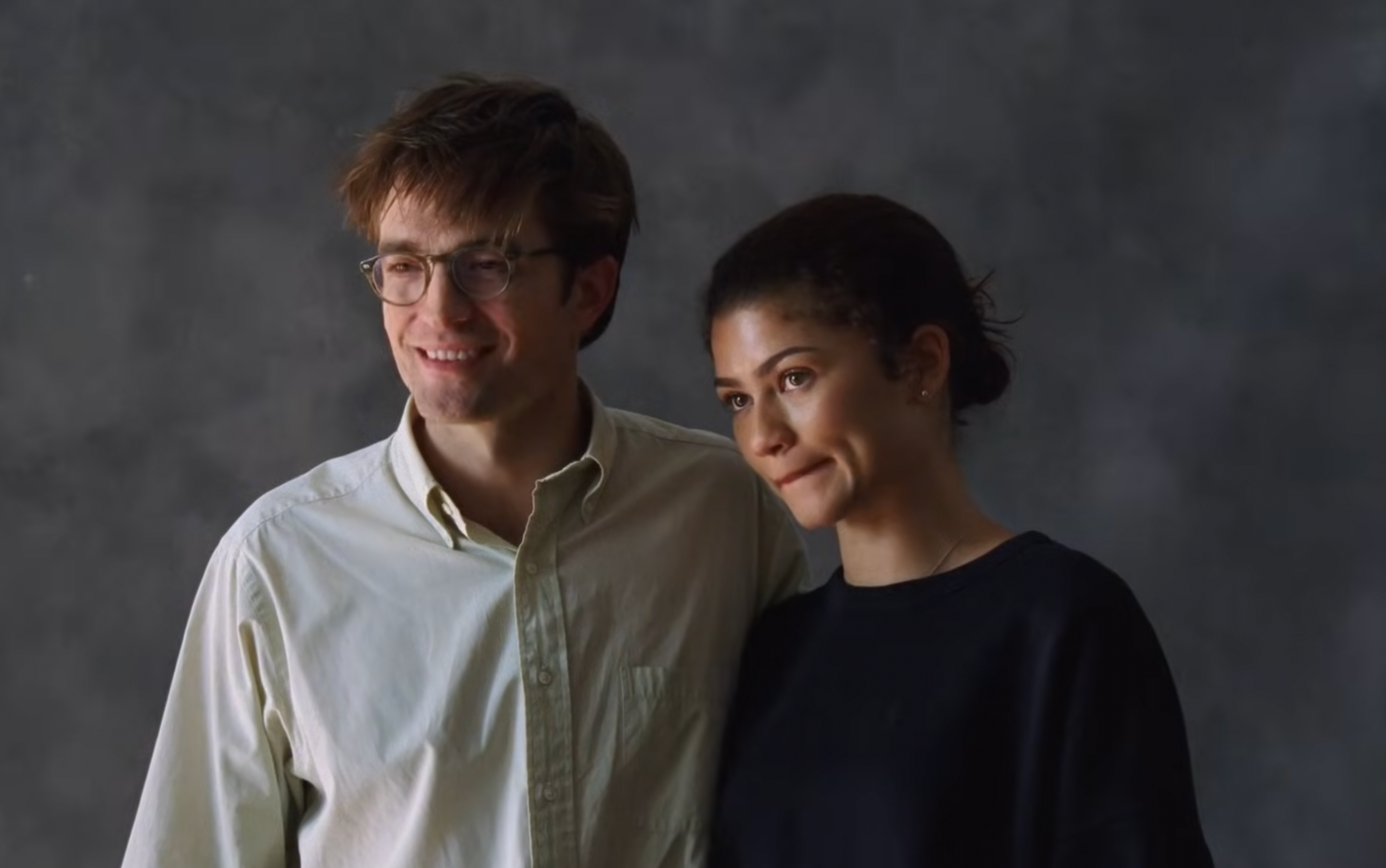
The brilliance behind the marketing of The Drama, a subversive new relationship story starring Robert Pattinson and Zendaya, comes from the way it hides those key details. The trailer establishes everything leading to the actual setup: Charlie and Emma meet cute at a café, fall in love, get engaged. Charlie fawns over his fiancé to such a degree that he struggles to unearth a single flaw while preparing his wedding speech. A montage recaps the awkward nature of their courtship (Charlie lies to say he’s read the same book as her to catch her attention), her silly laugh, their erotic chemistry. It sure looks like a perfect match. The corniness wouldn’t look out of place on the Hallmark Channel.
Then something…complicated happens. The biggest irony of The Drama, if not the biggest twist, stems from its evolution into a very dark comedy. Over dinner with close friends Mike and Rachel (Mamoudou Athie and Alana Haim), both couples decide to share the worst things they’ve ever done. At first, Rachel’s transgression sounds like it tops the list — she once locked a child in a closet — until Emma speaks up, sharing an upsetting detail from her teen years that alters the way everyone perceives her, including Charlie.
The bulk of The Drama revolves around the fallout of that admission, which I dare not spoil here. (Internet sleuths can do that on their own). While written and directed by Norwegian filmmaker Kristoffer Borgli, the A24 movie boasts Ari Aster among its producers, which helps contextualize the blend of disturbing and hilarious tension at play. Aster’s most successful horror movie, Midsommar, finds a couple on the rocks coming to terms with their incompatibility as disturbing events take shape. Many of Aster’s films toy with tone, inviting audiences to laugh at strange circumstances before catching them in the act when the situation turns bleak.
The Drama does that, too, but not to such an extent that it ever concludes Charlie and Emma have no future together. That’s the mystery the movie sets out to solve on the other side of its revelation. Does The Drama actually deliver a girl and a gun? The marketing answers that question with a dare: You have to see the movie to find out. It’s a risk worth taking.

Wedding turmoil is everywhere these days. The new Netflix horror series Something Very Bad Is Going to Happen follows a cursed woman who will die if she doesn’t marry her soulmate. Last year’s Splitsville explores the fallout of a divorce and the messy love triangle it creates, while the recent remake The Wedding Banquet explores the impact of homophobia on a same-sex couple’s future prospects. As marriage rates plummet in America, the movies offer a place for reflection and escapism at once.
The Drama fits right into that trend, but we’ve been here before. The latest slew of movies about marriage jitters echoes a tradition that stems back to 1930s screwball romcoms that scholar Stanley Cavell later dubbed “comedies of remarriage.” Back then, the Great Depression rendered divorce impractical for many cash-strapped couples. As divorce rates plummeted, couples attempted to work through their differences with mixed results, and storytellers took note.
In The Drama, a couple faces the possibility that their perfect companionship has more than a few cracks. The wedding ceremony builds to a bloody and bruised denouement. Even then, though, the cringe-comedy factor remains intact.
Part of the movie’s charm stems from the genius of its casting. Pattinson and Zendaya are 10 years apart, but both represent the increasingly rare appeal of big-screen movie stars. Together, they’re a cosmic collision, a set of familiar faces with the unmistakable ability to make audiences want to turn out. The movie plays off that collective association to make a familiar point that nevertheless bears repeating time and again: Stars are just like us. There’s a unique catharsis to watching artificial perfection come undone.