
A version of this article appeared in our weekly newsletter. Subscribe by signing up for a free account here.
Throughout the history of entertainment, successful artists have avoided the pressure to step onto a soapbox. Sometime in the 1960s, Elvis Presley was sitting in a press conference, in the midst of anti-war protests, and asked whether he would refuse the draft. “I keep my own personal views on that to myself. I’m just an entertainer,” he said. “The image is one thing and the human being is another. It’s very hard to live up to the image.”
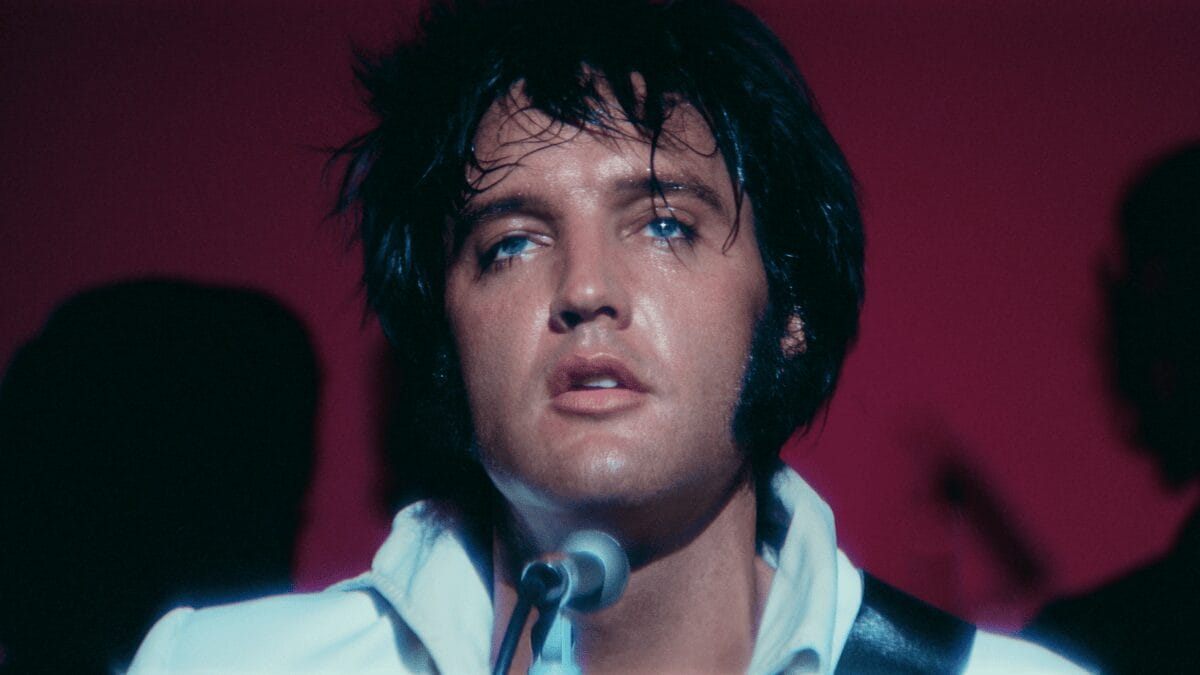
That scene arrives late in EPiC: Elvis Presley in Concert, the dazzling new documentary directed by Baz Luhrmann. The movie, which follows Lurhmann’s similarly maximalist 2022 biopic Elvis, culls from a vast archive of unreleased Elvis performances unearthed in recent years, much of which centers on his sensational Las Vegas residency.
For the most part, EPiC lingers in the appeal of Elvis’ dynamic stage presence, as well as his extraordinary range: He fuses gospel with soul alongside a smattering of covers, from The Beatles to Simon & Garfunkel, that add transcendent textures to each note.
Occasionally, though, Luhrmann and his editor Jonathan Redmond take a break from the music to let the King speak. Without acknowledging the divisive climate of the late 1960s, Presley positions the alchemical relationship with his audience as a specific kind of catharsis. “We’re all getting something out of our system,” he says. “We don’t know what it is. The important thing is that we’re all getting rid of it and nobody’s getting hurt.” Elvis may not have been an ideologue, but the communal spirit of his act certainly pressed for utopian ideals.
In the five decades since Elvis died, the pressure to take a political stance has only intensified. The latest instance ignited a firestorm at the Berlin Film Festival this past week, when the festival’s jury president Wim Wenders balked at a question about the festival’s official stance on the Middle East. “We have to stay out of politics,” he said. “We are the counterweight to politics.”
The backlash was swift and — in a development unfortunate to the substance of the festival — overshadowed much else in the days ahead. The question returned again and again at future press conferences, with only actor Rupert Grint emerging unscathed. Asked about fascism while promoting his new Finnish horror movie, he demurred: “Obviously, I’m against it.” And that was that.
In retrospect, Wenders may have been better suited to simply defer to the work rather insinuate (however unintentionally) that artists have no input into the way society unfolds. The word “political” is loaded, but the most compelling stories reflect their times. The Berlin lineup included plenty of topicality and complicated views of the modern world.
Highlights included the Anthony Chen’s Singaporean drama We Are All Strangers, about a twentysomething working class family man struggling with the socioeconomic imbalances that assail him at every turn. Australian director Warwick Thornton’s violent Western Wolfram explores the ghosts of colonialism that haunt his country’s indigenous population, a theme found throughout his work. And the festival’s opening night entry, No Good Men, presents a heartbreaking romance against the backdrop of the U.S. withdrawal from Afghanistan in 2021. Artists may not want to talk about politics, but the work speaks for itself.
And so did Elvis. Yes, he was thrusting his hips in Nevada while Jimi Hendrix was burning a guitar and eviscerating “The Star-Spangled Banner” at Woodstock. Elvis declined to air his thoughts on the darker aspects of his times. He did, however, offer the ultimate contrast, with infectious swagger and ceaseless positivity that would make most politicians jealous. He was a dream personified. Overtly or not, he made his point, and the audience took it without hesitation.