
The article originally appeared in The Playhouse Post. To subscribe, go here.
“The Wizard of Oz” screens this weekend at the Southampton Playhouse as part of The Scorsese Family Experience.
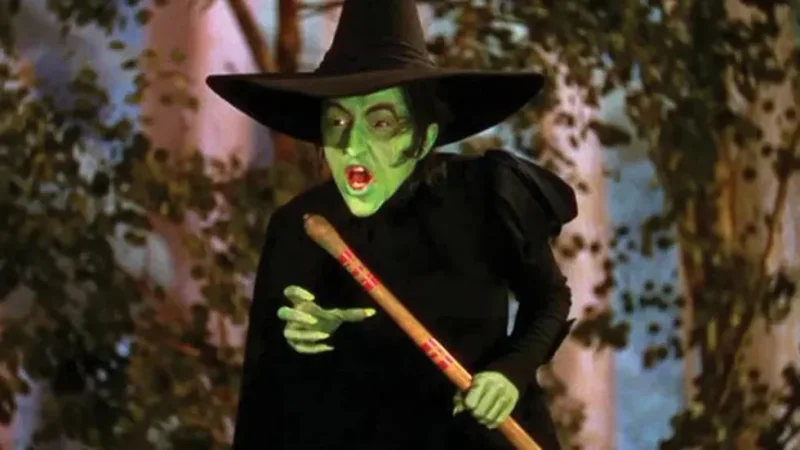
For generations of moviegoers, Margaret Hamilton was the Wicked Witch, the lime-colored villain who stalks Dorothy (“and your little dog, too!”) in the 1939 Technicolor musical The Wizard of Oz. For Scott Meserve and his siblings, Hamilton went by a very different name: Grandmother.
Hamilton was a stage actress who secured the iconic role after years of obscurity. In the aftermath of the movie’s release, and its expanding legacy in film history, Hamilton remained a devoted character actress when she wasn’t spending time with her only child, Hamilton. Later in life, Hamilton spent her summers in Maine, but during the final years of her career she was often in the Hamptons visiting her relatives. (Hamilton recalls spending plenty of time at the Southampton movie theater in the late 1950s.)
In the four decades since Hamilton’s death, The Wizard of Oz – and the Witch herself – have remained powerful forces in popular culture. The movie is a pivotal gateway for many young audiences discovering the power of the big screen, and Hamilton’s cackling screen presence is their first genuine movie villain.
With The Wizard of Oz returning to the Playhouse on its IMAX screen, I spoke this week with Scott Meserve, a New Yorker who works in philanthropy with a background in film festival production (including time with the Hamptons International Film Festival). Meserve recalled the way his relationship to his mother’s career changed over time and his thoughts on its continuing relevance today.
When did you first become aware that your grandmother had this significant role in film history?
It’s an apocryphal story my father likes to cock an eyebrow and tell. When we were little – seven or eight – we were living overseas in India. My father was with First National Citibank and spent 15 years traveling around the world. I have an older brother and a sister. We were born in Seoul, Taiwan, and Bombay. I have the most memories of Bombay. It was 1975 and at some point, my father showed us the film. After we saw the film, he announced, “The very nice lady with the green face is coming to visit!”
Did that creep you out?
I have a vestigial memory of being frozen and hiding behind the couch when the front door of the apartment opened. Of course, in reality, my dad’s mother was coming to India to see his setup and visit us for the first time since infancy. As much as that is connected to the film, and everybody’s fascination with it, really my relationship with her was as a grandchild. We came back to the States in 1976 and lived in Princeton, New Jersey. My grandmother lived in Gramercy Park. I remember coming up to the city in the car to visit her, going upstairs in her building, and seeing this little old lady.
At what point did that start to change for you?
As I got into my teens and twenties, we’d go out to dinner with her in the city. All these actors, young and old, would come up to her: “Oh my goodness, Margaret Hamilton!” For a while, we almost had a little chip on our shoulder, like, “Hey! She may be your dream encounter in the restaurant, but this is our grandmother!” But she lived for the theater, for the stage, it was what made her tick.
Did you talk to her about her fame?
I don’t recall ever having a conversation with her about the movie. She died in 1985 when I was a senior in high school. That was the peak moment where she was my grandmother, not somebody else’s movie star. We talked about whether we’d see each other for Christmas back then. I didn’t know what else to ask. It was only after she passed and I grew into being a film nut did I think it would have been great to sit down and hear some firsthand stories. In retrospect, that’s one of the things that has generated some real noise – all the myths. Oh, the munchkins were drunk, Judy Garland was on pills. There might be some truth to some of it but it became its own cottage factory.
How did your relationship to the movie evolve as you got older?
I still think of it as a studio product that had a decent moment in its time with the release in 1939, but really only when it started appearing on television screens did it find its way. I loved the Technicolor stuff, the stunts, although it’s no secret that my grandmother was badly hurt in one of them. But it’s fun to see it. We knew that it was a fantastic piece of filmmaking in its own right but we were much more engaged with it on a cultural level. Anytime we told people about it, someone had a story for us: “Oh my gosh, your grandmother wrote me back with an autograph or a photograph of her as a Witch! I bumped into her at a restaurant! My cousin’s wife knew her at a theater in New England! People love having a tangible connection to the movie. It made such an impression on people.
What would you have asked her if you had the chance now?
I wouldn’t have asked her about her character, the Witch, but I read John Lahr’s biography of his dad, and I was so taken by his vaudeville background of all three of the guys. They worked blue, told jokes, they wrote each other, and my grandmother was a well-to-do, prim-and-proper woman from Ohio who didn’t associate with people like this. I would’ve loved to get a cup of coffee with her and ask her how she connected with these guys. She was such a social anomaly. It was only after she got her diploma as a nursery school teacher did her parents permit her to dabble in the arts. She was definitely a fish out of water. I also would’ve asked her why she wasn’t in any of the original marketing materials.
The role was originally supposed to go to Gale Sondergaard, but she famously withdrew because of the so-called “ugliness” of the Witch. Your grandmother, of course, was not ugly – but how do you think this characterization of the role impacted her?
She wasn’t “the sexy witch.” They went in a different direction. My grandmother was clearly not a glamorous face onscreen. Before the Witch and after the Witch, she was hired as the nosy neighbor, the housemaid dusting furiously in the background while eavesdropping. There were a couple of glamour roles over the years but mostly she had comedic roles and that persona was what paid the bills for her. It kept her working. At the same time, it helped put her in a production of Oklahoma in Lincoln Center and singing in A Little Night Music. There were moments where she became regal and really enjoyed “straight theater,” if you will, as opposed to appearing on Gunsmoke as the crazy lady with the shotgun. But at the end of her career, she had the Maxwell House coffee commercials, where she was the elderly, avuncular proprietress of the store. She was semi-comedic and played it straight at once.
What’s your feeling about the success of Wicked, which repositions the character of the Wicked Witch as a kind of folk hero?

What Gregory Maguire [the author of the book Wicked] did was brilliant. He was the first person to reimagine the entire cosmos of Oz in a way that clearly opened the door to all that came after. I was fortunate enough to be on a panel with Stephen Schwartz [the composer and lyricist of the musical Wicked] about Oz a few years ago. I was struck by something he said, which was that after they started working on the film based on the musical, they started doing test screenings.
Basically, every time they diverged from a character who was understood from the original film, we got negative votes from the test audiences. He said they learned very quickly that people were very invested in these original characters. And yet, to your point, it really is a transformation. Part of the power of my grandmother’s performance is that this person is as dyed-in-the-wool as they are. That’s the force she provides. She shows up as this terrifying, terrible thing – a persona against which Dorothy and the supporting actors have to rail against. There’s not a lot of nuance with her and the strength of her performance onscreen is that she took wickedness to a whole new level, by displaying the joy of being the baddie.
How do you feel about the film today?
My family has an interesting relationship with the film. We love it and our connection to it. My grandmother was a working stiff at the time who refused to be under studio contract because she wanted to raise my dad, her only child, so she didn’t want to be under the whim of the studios to be sent from here to work on projects. She just took a paycheck. Every once and a while, one of us will do something for the film. I live in Washington Heights and we have the Fort Tryon Park up there. They had an outdoor screening there a few years ago that was very family-friendly. I spoke for a few minutes before the screening and asked who had never seen the film before. A lot of hands shot up.