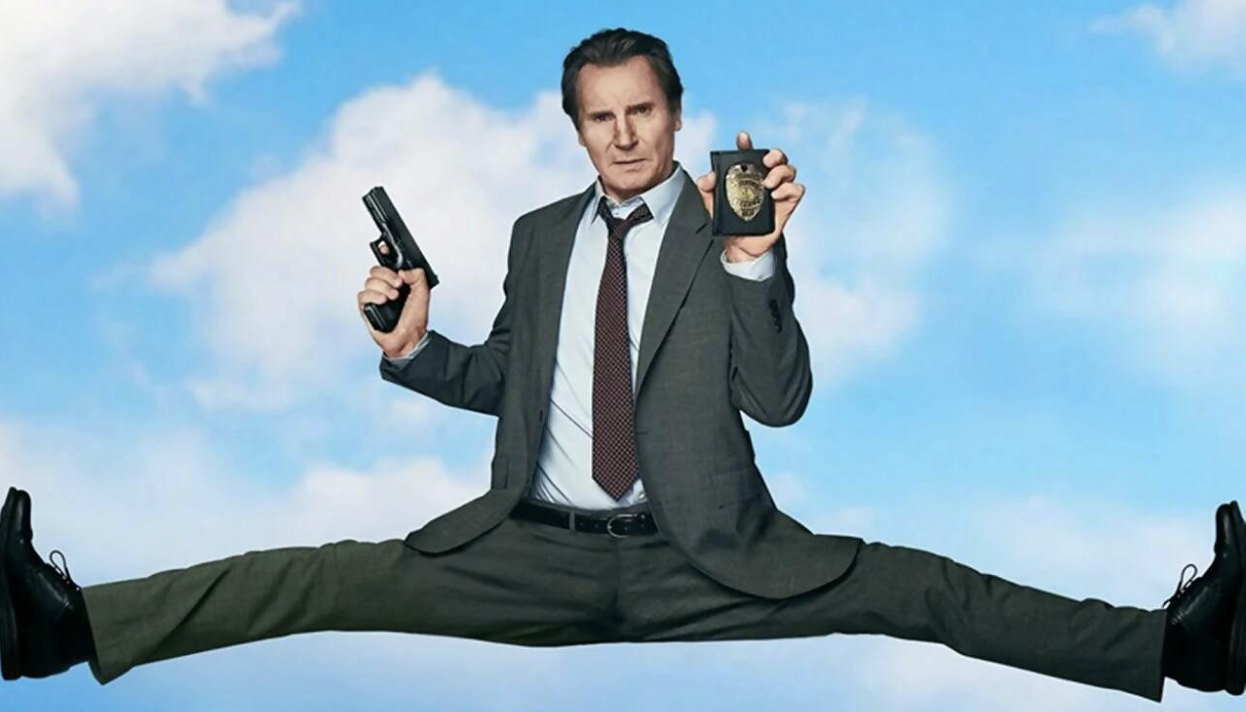
| This article originally appeared in The Playhouse Post, the newsletter for the Southampton Playhouse. Subscribe to weekly updates here. Remakes are constant these days, and when a beloved franchise gets a new face, fans of the original tend to get suspicious. With that in mind, I’m happy to report that the 2025 edition of The Naked Gun, directed by Popstar: Never Stop Popping filmmaker Akiva Schaffer, produced by Family Guy creator Seth MacFarlane, and starring late-period action hero Liam Neeson, delivers a string of lowball comedy delights on par with the 1988 original. Rather than positioning Neeson’s deadpan performance as dopey cop Frank Drebin, the disaster-prone investigator made so memorable by Leslie Nielsen, Neeson announces himself in the ludicrous opening sequence as “Frank Drebin, Jr. – the new one.” And the movie follows suit, operating very much like the freewheeling offspring of the original. In the heyday of parody movies – many of which, like the original Naked Gun, were directed by the Zucker Brothers – the genre created a permission structure for cartoonish gags to glide into a real-world context. The Zuckers’ movies (which also includes the masterful Airplane! and The Kentucky Fried Movie) work so well because the people populating them are dead serious, unaware of the ridiculous circumstances around them. The trend arguably reached its peak in 2000 with the release of the first Scary Movie. One year later, in the aftermath of 9/11, Graydon Carter declared “the end of the age of irony” in Vanity Fair, and self-aware comedies took the hint. There hasn’t been a significant entry in the genre ever since.Until now. The Naked Gun should be a wake-up call not only to studios but filmmakers to embrace the opportunities of marrying the sublime to the ridiculous, crafting punchlines through the language of cinematic storytelling. That’s a lineage that stretches back to the earliest days of the movies, when comedy was eager to please and innovative at the same time. The latest Naked Gun entry arrives at a very different moment in American culture, one rife with division and widespread conversations about sensitivities that some comedians claim have stymied their ability to crack jokes. At a recent Southampton Playhouse event, comedy club legend Caroline Hirsch told me that our current climate has actually had the opposite effect on today’s best comics. “It’s made them better,” she said, and it has probably made the movies better as well. The Naked Gun is intentionally dumb, sophomoric, and sometimes kind of gross, but never at the expense of an all-inclusive good time. Here are a few more reasons why it works so well. Dramatic Performances Make the Jokes Land Neeson has never been identified with comedies; quite the opposite, in fact. Ever since the Taken franchise took off, the actor has enjoyed a string of successes in tense, fast-paced action enterprises delivered in a dead serious tone. From a performance standpoint, he does very little in Naked Gun to distinguish himself from the actor in those movies. That’s what makes the movie work so well. Frank is a serious character in his own world, and people are often aghast at his persistent stupidity. He’s matched by Pamela Anderson, who might have seemed kitschy if she landed the role of the sultry client who waltzes into his office with a mystery a few years ago. However, after her impressive dramatic turn in 2024’s bittersweet character study The Last Showgirl, Anderson has been reinventing herself as an acting force in her prime, and she’s able to maintain that persona with Naked Gun. Together, these two performances give Naked Gun turn core juxtaposition – serious people in a mad, mad, mad, mad world – into a triumph. It’s a Real Ode to Detective Movies Frank finds himself seeking answers after a dead man turns up in a river. (“Drunk?” a colleague asks the officer as Frank investigates the scene, presumably referring to the corpse. “Only a little to wake me up,” Frank says.) Despite the outlandish rhythms of each scene, Naked Gun turns on the premise of a genuine mystery, with Frank gathering suspicions about a local crime boss (Danny Huston) and his connections to the murdered man, the brother of Anderson’s character. A stern voiceover follows Frank everywhere he goes, resurrecting another genre in the process: the detective noir. In the 1940s, the genre took its cues from the likes of Raymond Carver and Dashiell Hammett, but it hasn’t been in vogue for ages. That doesn’t stop Naked Gun from having fun with this aging trope. In one of the movie’s funnier scenes, Frank’s internal monologue muses constantly about the attractiveness of Anderson’s character to an extreme, even childlike degree (she has “a bottom that would make any toilet beg for the brown”). But the voiceover is soon interrupted by dozens of others from the rest of the men at the police station, all saying variations of the same thing. It’s a well-timed punchline one might expect to find in the pages of MAD Magazine that pays tribute to an entire era of movies in the process, and poking fun at an outmoded portrayal of masculinity. The Gags Are Relentless The energy of Naked Gun ensures that the movie never lets audiences grow fidgety or bored. One gag glides quickly into another with expert timing, and they often emerge from unexpected directions, so that it’s impossible to settle into a scene without some reminder of the comedic attitude in play. Stepping into a nightclub to interrogate his culprit, Frank grabs a metal cup by the door and chugs it with determination…only to cough up change as he realizes he’s been chugging from the tip jar. Minutes later, after a tense confirmation, he charges off frame…only to reappear a few seconds later, realizing that he has accidentally walked in a circle. Later, when interrogating another criminal, he unveils his cop cam footage to prove the man was at a crime scene…but the camera mainly shows Frank in a squirm-inducing scatalogical situation that stretches back to the urinal gag in the original Naked Gun. There’s a fundamental innocence to this brand of comedy stretching back to the earliest days of vaudeville and slapstick. There’s substance and soul to the greatest Charlie Chaplin movies, but the humor often comes from fleeting moments of physical discomfort or confusion, a restless energy that insists audiences must always remain entertained. Naked Gun takes that philosophy and runs wild with it. The Direction Is First-Rate Not enough can be said about the genuine filmmaking chops behind successful comedies. Yet comedians who grasp the rhythms of onscreen humor often make great directors. Chaplin directed the bulk of his work, as did Woody Allen, Albert Brooks, Elaine May, and many others. Schaffer, who first came to prominence as part of the “Lonely Island” comedic trio that also includes Andy Samberg and Jorma Taccone, falls into that bucket. Naked Gun is a slick-looking movie – no single frame, seen on its own, would indicate the humor within – and the timing of its jokes often relies on precise timing in the midst of busy scenes. A lesser filmmaker would rush the jokes at the expense of the performances or vice versa. But Schaffer knows what he’s doing and keeps Naked Gun engaging throughout by never taking the material for granted. It’s True to Its Roots Early on, Frank gets on his knees to speak to a photo of his late father (Nielson passed away in 2010, but had plans for a fourth Naked Gun film in which his character was training his successor). The camera pulls back to reveal various other members of the department on their knees as well, speaking to other former cast members. One cop nearly follows suit by speaking to an old photo of O.J. Simpson, who played a supporting role in the original, then turns to the camera and shakes his head. It’s a savvy way of acknowledging the complexities of the past without feeling entirely tied to it. Beyond that, the scene is one of many ways that Naked Gun makes it clear nobody wants to erase memories of the original. That mentality extends to the end credits, which resurrect the opening sequence from the original, a POV from the roof of a cop car as it veers off the road and into a series of unlikely environments. There’s a celebratory quality to this undercurrent in the movie, and it helps make the case that this anarchic commitment to lowbrow comedy is, in fact, high art. The Naked Gun is now playing at the Southampton Playhouse. For tickets, go here. |
Playhouse Post
5 Reasons Why the New ‘Naked Gun’ Is Just as Funny as the Original